
Respiratory Alkalosis
As we have discussed, if too much carbon dioxide was removed from the body, by taking lots of rapid, shallow breaths, the pH of the blood would begin to rise. This is respiratory alkalosis, and can be differentiated from a metabolic alkalosis by the abnormally low PaCO2.
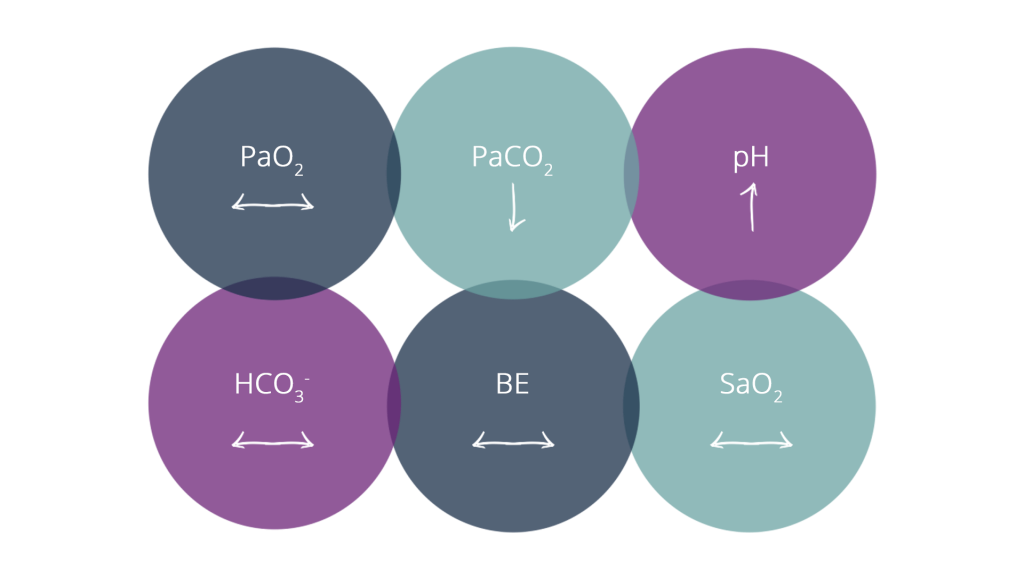
Diagram: Uncompensated Respiratory Alkalosis
In most scenarios, respiratory alkalosis is caused by hyperventilation. Understanding the cause of hyperventilation will help in the management of these patients. Hyperventilation can caused by a number of factors, including a central process, hypoxaemic process, pulmonary process or iatrogenic process.
Causes of hyperventilation:
- Central causes of hyperventilation include a head injury, stroke, hyperthyroidism, anxiety-hyperventilation, pain, fear, stress, drugs, medications such as salicylates, and various toxins
- Hypoxic stimulation can lead to hyperventilation in a patient with Type I respiratory failure; by increasing the ventilatory rate to improve the oxygen levels, you can ‘blow off’ too much carbon dioxide. Think of the hyperventilation as a compensatory mechanism for hypoxia.
- Pulmonary causes include pneumothorax, PE, pneumonia, and COPD or asthma exacerbations
- Iatrogenic causes, caused inadvertently by a medical intervention, are primarily related to hyperventilation in patients on mechanical ventilation
If this acid-base imbalance is prolonged, the metabolic system will begin compensating for an alkalotic environment by removing bicarbonate from the system. This metabolic compensation for a respiratory alkalosis normalises the pH.
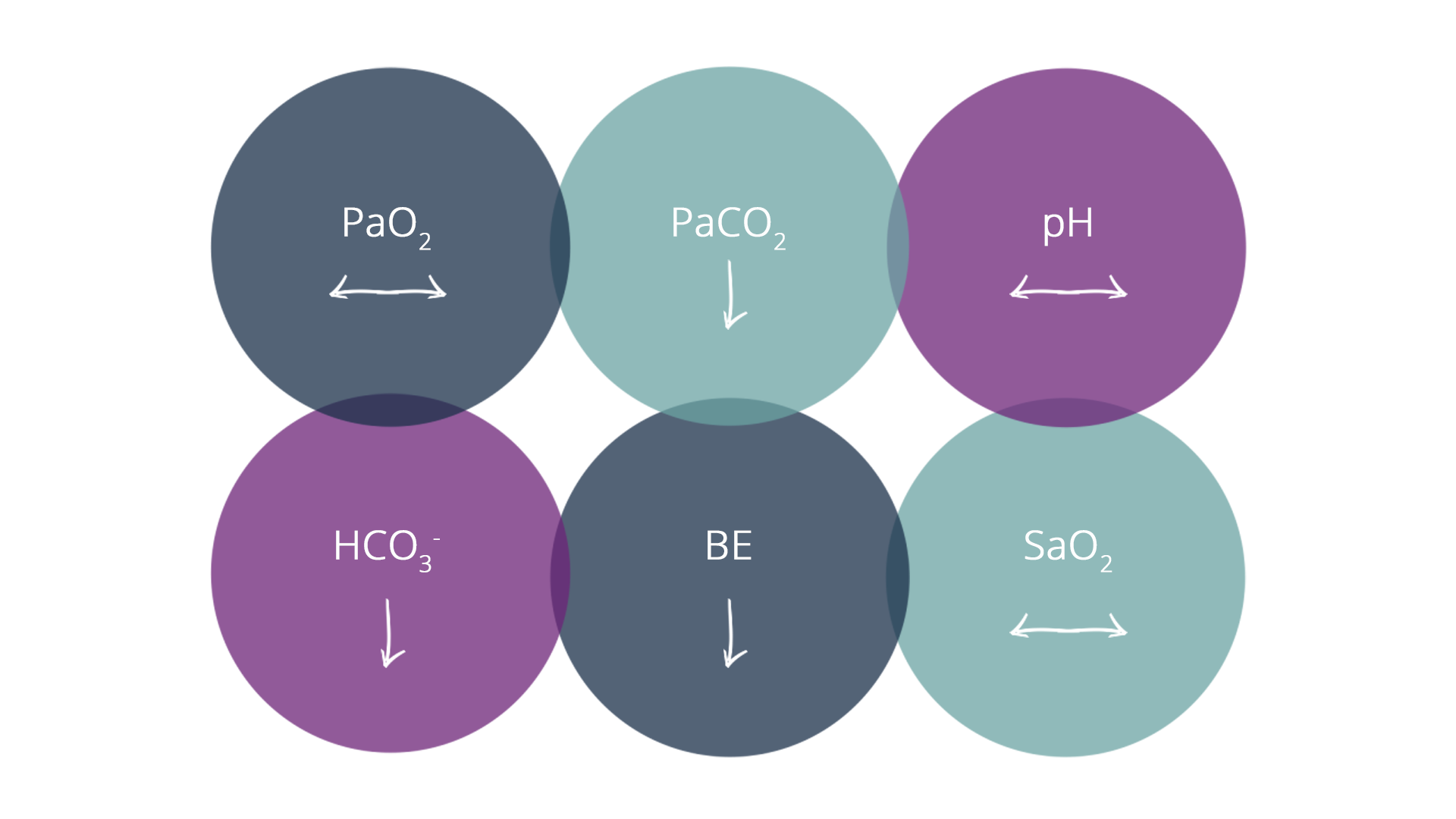
Diagram: Respiratory Alkalosis with Complete Metabolic Compensation
As you can see, respiratory alkalosis may be an acute process or a chronic process, however, the metabolic compensatory process that returns the pH to normal range occurs over the course of days.